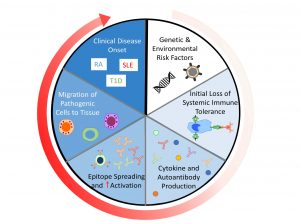
Safe Mycophenolate Mofetil Withdrawal in Patients with SLE
Dr. Judith James and Dr. Eliza Chakravarty, in collaboration with the NIAID-funded Autoimmunity Centers of Excellence, have discovered that lupus patients experiencing remission may be able to safely taper off certain commonly prescribed therapeutics. In this study, Drs. James and Chakravarty determined the effects of mycophenolate mofetil withdrawal in patients with quiescent SLE. During a clinical trial spanning six years, they discovered that patients who stopped taking mycophenolate mofetil were not significantly inferior to those who remained on the drug, as long-term usage of mycophenolate mofetil leads to increase risk of infection, malignancies, gastritis, miscarriages, or severe birth defects. Overall, this study will help rheumatologists guide their patients through the risks and benefits of stopping medication, while also setting up for ongoing studies to better predict which patients will experience problems going off medication.
Read the article here.
Read OMRF's Press Release here.
 Read more

 Recent findings from OMRF have revealed molecular clues that will allow doctors to separate Sjögren’s syndrome patients into three distinct categories, allowing for more targeted treatment approaches. Read more about this exciting discovery
  Read more
  Learn more about this research project